Storefront Signs for Ohio Retail & Restaurants
Storefront signs are the difference between a lease and a business. A new tenant in an Ohio retail center, a restaurant taking over a former tenant's space, a clinic opening in a converted storefront — all of them have the same problem: the landlord has a sign criteria document, the city has a sign code, the building has a wall that was never designed for a sign, and the opening date is already set.
Zealot Signs designs, permits, fabricates and installs complete storefront sign packages from our shop at 71 Seldom Seen Rd in Powell. One company handles the landlord approval, the city permit, the letters, the window graphics, and the install — so nobody is waiting on a vendor they cannot reach.
How Zealot Signs delivers this work
Every step below happens inside Zealot Signs — no brokered design, no subcontracted fabrication, no day-rate install crew.
What a complete storefront package includes
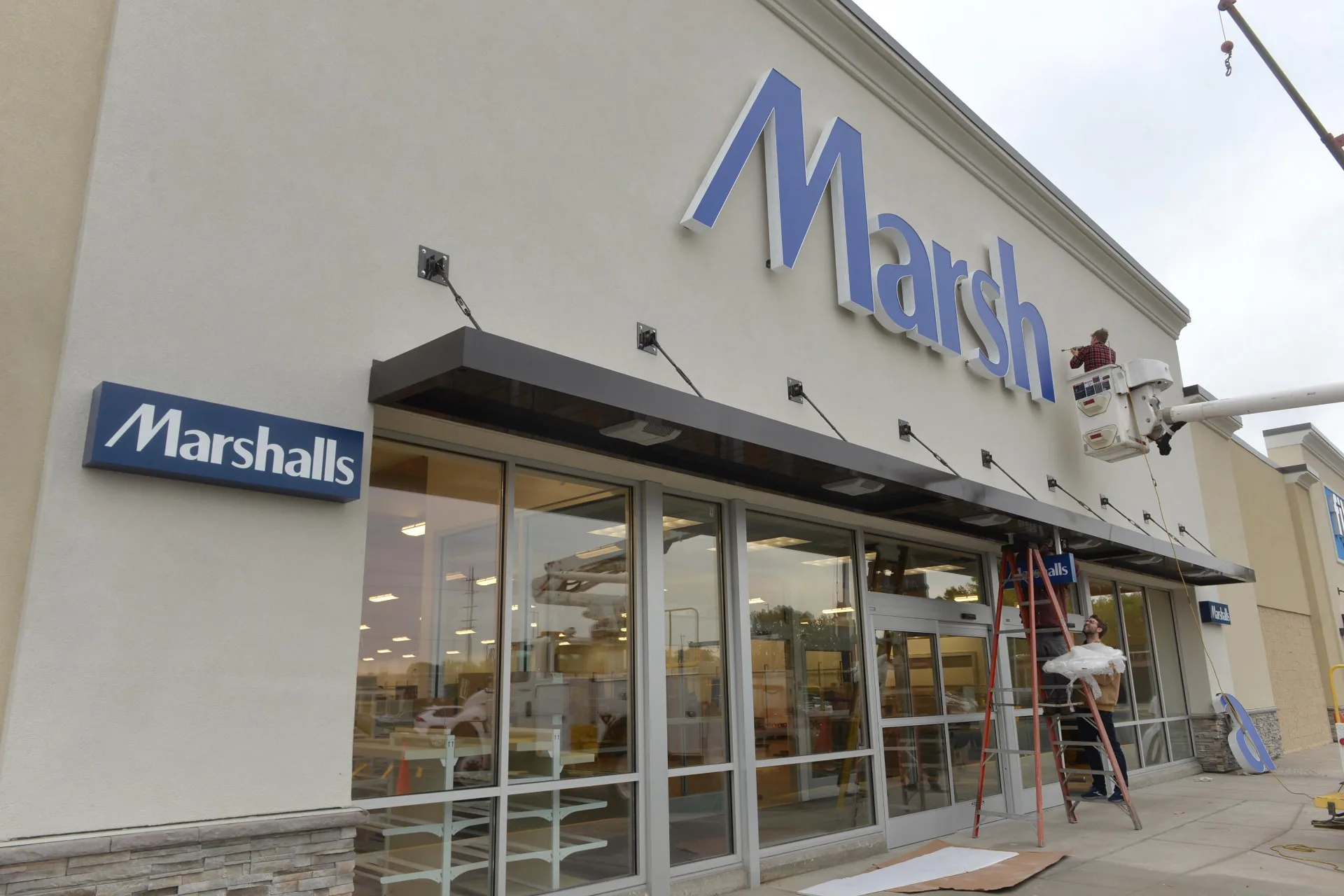
- Fascia identification — front-lit channel letters, halo-lit letters, dimensional non-illuminated letters, or a logo cabinet, on a raceway or flush mounted.
- A blade or projecting sign where the storefront faces a sidewalk and pedestrians need to see it from up the block.
- Window graphics — cut vinyl copy, frosted privacy bands, perforated film, and seasonal promotional graphics.
- Door signage — hours, address numerals, push/pull, and required occupancy or entrance decals.
- Awning or canopy graphics where the building already has one.
- Interior signage that carries the brand past the door — lobby logo, menu boards, department and restroom identification.
Landlord sign criteria come before the city
In most Ohio multi-tenant centers the landlord's sign criteria are stricter than the municipal code. They dictate letter height, letter style, whether the raceway is allowed and what color it must be painted, illumination type, and how far the copy must hold off the ends of the lease line. Building a sign that satisfies the city but violates the criteria means the landlord makes you take it down.
We read the criteria first, design to the tighter of the two rule sets, and produce the landlord approval package and the city submittal from the same drawings.
Ohio storefront sign permits
Sign area on a storefront is usually calculated from the width of your lease frontage, so two tenants in the same building can be allowed very different signs. The City of Columbus issues a Graphics Permit and reviews area, projection, and illumination; Dublin, Hilliard, Westerville, Grove City, Worthington, Upper Arlington, and Delaware each run their own review, several with architectural or historic design review layered on top.
Illuminated signs generally need an electrical permit as well, and a sign on a building undergoing tenant fit-out may need to be coordinated with the certificate of occupancy inspection. We pull the permits ourselves and sequence the install around approval so the sign does not go up twice.
The former tenant's sign, and the wall underneath it
Almost every storefront project starts with a removal. Taking down the previous sign exposes fastener holes, unsealed penetrations, sun-faded paint outlines, and sometimes a raceway wired to a circuit nobody documented. We remove, patch, and paint before the new sign goes up, and we reuse existing raceways and circuits when they are sound — which saves real money.
Timeline for a storefront opening
The schedule that works looks like this: survey and design first, landlord approval next, permit application after that, then roughly three to four weeks of fabrication in our shop, then install. Permit review time varies by jurisdiction and is the part nobody controls, so the earlier a sign package starts, the more slack there is before opening day.
If your opening is close, tell us the date up front. We can often stage the job — get temporary banners or window graphics up so you can open and trade while the permanent letters are still in review.
Storefront signs: common questions
How much does a storefront sign cost in Ohio?
It depends on size, illumination, and mounting. A set of illuminated channel letters is the most common storefront purchase and costs more than dimensional non-illuminated letters or a window graphics package. Access matters too — a sign above one story needs a lift. We quote from your actual frontage, lease criteria, and city sign allowance.
How long does it take to get a storefront sign?
Plan on roughly three to four weeks of fabrication after design approval and permit issuance, plus permit review time that varies by city. From first call to installed sign, most storefront projects land in the six to ten week range. Removal-and-replace of an existing face is faster.
Do you handle the landlord's sign approval?
Yes. We review the sign criteria in your lease, design within it, and produce the drawing package the landlord or property manager needs to sign off. We do the same for the city permit, so you are not managing two approvals through two vendors.
Can you take down the old tenant's sign?
Yes. We remove the existing sign, patch and paint the fascia, and assess whether the existing raceway and electrical can be reused for the new sign. Removal is normally quoted as part of the same job.
What if I need signage before the permanent sign is approved?
We can produce temporary banners, mesh signs, and window graphics so you can open and be identified while the permanent letters are still in fabrication or review. Some jurisdictions limit how long temporary signage may stay up, and we tell you what applies.
Related pages
More Zealot Signs products & services
Monument signs for apartment complexes (Columbus)
Entrance monuments and property identification for Columbus apartment communities — masonry, aluminum cabinets, illuminated or not.
Channel letter & commercial sign repair (Columbus)
Dark letters, flickering LEDs, dead power supplies, water intrusion — diagnosed and repaired by our own crews across Columbus.
Commercial signage in Columbus, Ohio
A licensed commercial sign company for Columbus storefronts, restaurants and office properties — every step in-house.