Retail Store Signage: Storefront, Window and In-Store Graphics
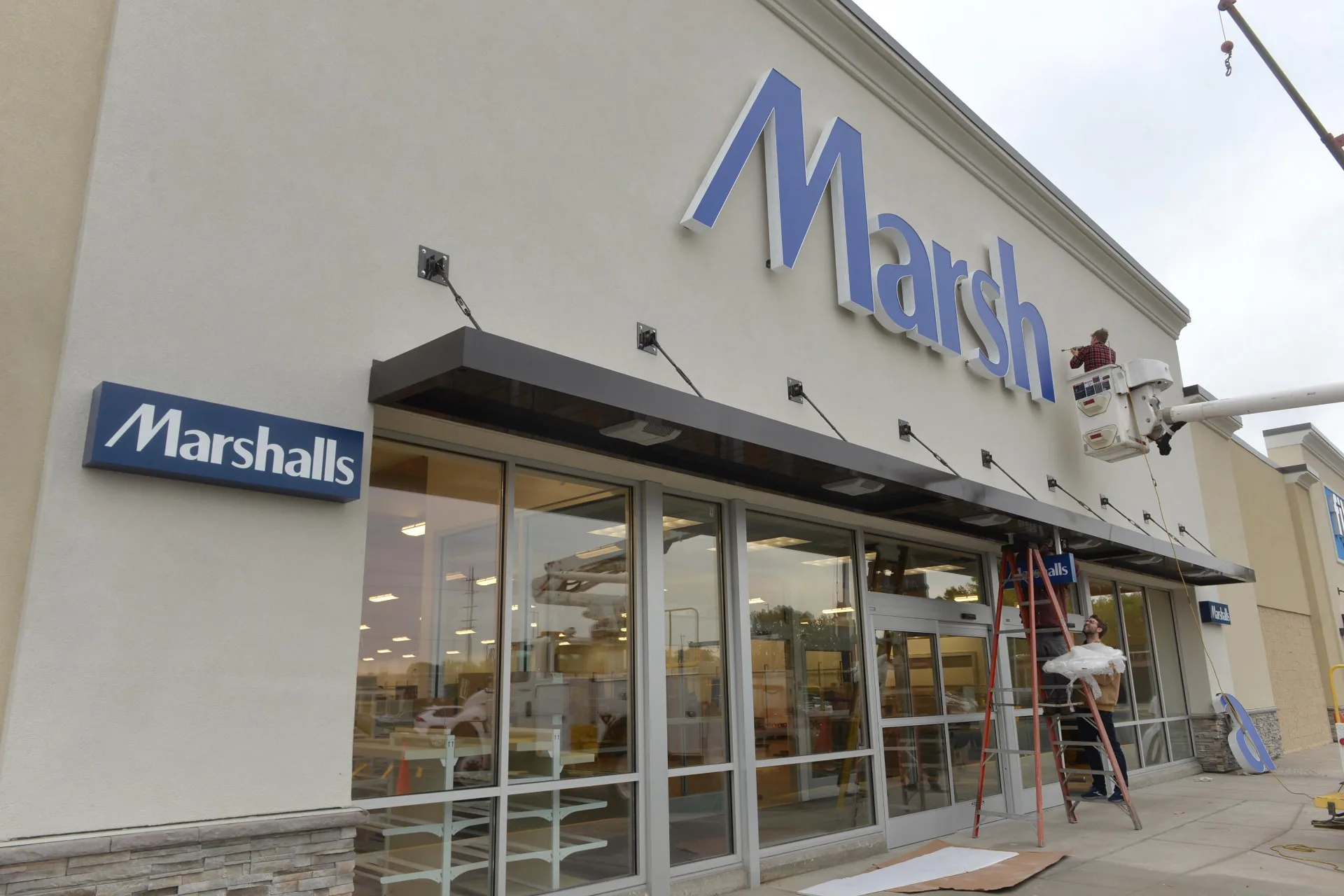
Retail store signage is a system, not a sign. The storefront letter set gets you recognized, the tenant panel on the center's pylon gets you found from the road, the window graphics convert the person walking past, and the in-store signage moves people through the space. Zealot Signs builds all of it in-house in Powell, Ohio, and installs it with our own Ohio-licensed crews.
We work both sides of retail: individual tenants opening or rebranding a store, and the developers and property managers who own the center's monument, pylon and directional signage.
How Zealot Signs delivers this work
Every step below happens inside Zealot Signs — no brokered design, no subcontracted fabrication, no day-rate install crew.
The retail signage system, from the road inward
- Center identification — the monument or pylon at the entrance, with tenant panels built as a removable modular system so turnover is a panel swap, not field work.
- Storefront identification — illuminated channel letters, a fabricated cabinet or dimensional lettering, sized to the sign area your lease and the local code allow.
- Window graphics — cut vinyl, perforated film, frosted bands and full promotional wraps; the fastest and cheapest way to change the storefront's message.
- In-store — departmental and category signage, hanging blade signs, dimensional wall features, fitting-room and checkout identification.
- Compliance and site — ADA restroom and room identification, exit and occupancy signage, accessible parking, and directional signage in the lot.
Landlord criteria: the document that decides your storefront
In almost every multi-tenant center your sign is governed by two things: the municipal sign code and the landlord's tenant sign criteria. The criteria document is usually stricter, and it dictates letter height, illumination type, raceway or flush mounting, permitted materials and even color. Designing a beautiful sign that violates the criteria means a rejected submittal and a redesign on your dime.
We read the criteria first, design to it, and produce the submittal package in the format the landlord's reviewer expects — then file the municipal permit. Doing it in that order is what keeps a store opening on schedule.
Multi-location retail and brand consistency
For a retailer with several Ohio locations, the risk is drift: each store gets its own local sign shop, and three years later no two storefronts match. We hold your specifications, fonts, finishes and drawing set on file and fabricate every location from the same standards, adapting only where local code or landlord criteria force a change — and we tell you when that happens rather than silently deviating.
For rollouts we work from a site survey per location, produce one submittal set per jurisdiction, and sequence installs so your crews and your opening dates line up.
Window graphics: the highest return in retail signage
Window graphics start around $500 for a storefront and can be changed seasonally. Perforated film lets you cover glass with a full-color image while your staff still sees out. Frosted bands add privacy at fitting-room or checkout height. Cut vinyl handles hours, phone number and social handles cleanly.
The practical constraint is code and lease: many jurisdictions and landlords cap the percentage of glass that may be covered. We check that limit before we design, so the graphics you approve are the graphics that can stay up.
Retail store signage: common questions
How much does retail store signage cost?
At Zealot Signs, illuminated storefront channel letters start around $3,000, window graphics around $500, and vinyl graphics and lettering around $300. Center identification is larger — monument signs start around $5,000 and pole or pylon signs around $6,000. A single-store opening package is typically quoted element by element so you can phase it around your build-out.
Who is responsible for the sign — the tenant or the landlord?
In most retail leases the tenant pays for and maintains its own storefront sign and tenant panel, while the landlord owns the center's monument, pylon and site signage. Your lease will also contain a tenant sign criteria document setting letter height, illumination and mounting rules. We read that document before designing and produce the landlord submittal package as part of the job.
How much of my storefront window can I cover with graphics?
It varies by jurisdiction and by lease — many sign codes and landlord criteria cap window coverage as a percentage of the glass area, and some restrict it further on the primary entrance. We confirm the limit for your specific address before designing, which avoids the common and expensive outcome of graphics being installed and then ordered removed.
Can you do signage for several store locations at once?
Yes. We hold your brand standards and drawing set on file and fabricate every location to the same specification, handling a separate permit submittal per jurisdiction and per landlord. Our installation crews are Ohio-licensed and dispatched from Powell, and we sequence installs around your opening dates.
How long before opening should I start on signage?
Earlier than most tenants do. You need landlord approval, then a municipal permit, then roughly three to four weeks of fabrication, then an install window that depends on the building elevation being finished. Signage is one of the most common causes of a delayed retail opening, so bring us in during the lease build-out rather than after.
Related pages
More Zealot Signs products & services
Monument signs for apartment complexes (Columbus)
Entrance monuments and property identification for Columbus apartment communities — masonry, aluminum cabinets, illuminated or not.
Channel letter & commercial sign repair (Columbus)
Dark letters, flickering LEDs, dead power supplies, water intrusion — diagnosed and repaired by our own crews across Columbus.
Commercial signage in Columbus, Ohio
A licensed commercial sign company for Columbus storefronts, restaurants and office properties — every step in-house.