Interior Wayfinding Signs for Commercial Buildings in Grove City, Ohio
The short answer
Zealot Signs designs and fabricates interior wayfinding systems for Grove City, Ohio commercial buildings — lobby directories, floor and corridor directionals, room and suite identification, ADA tactile and Braille signage, and code-required stairwell and exit signage. We plan the sign locations from your floor plans, build everything in our Powell shop, and install it as one coordinated system rather than a pile of individual signs.
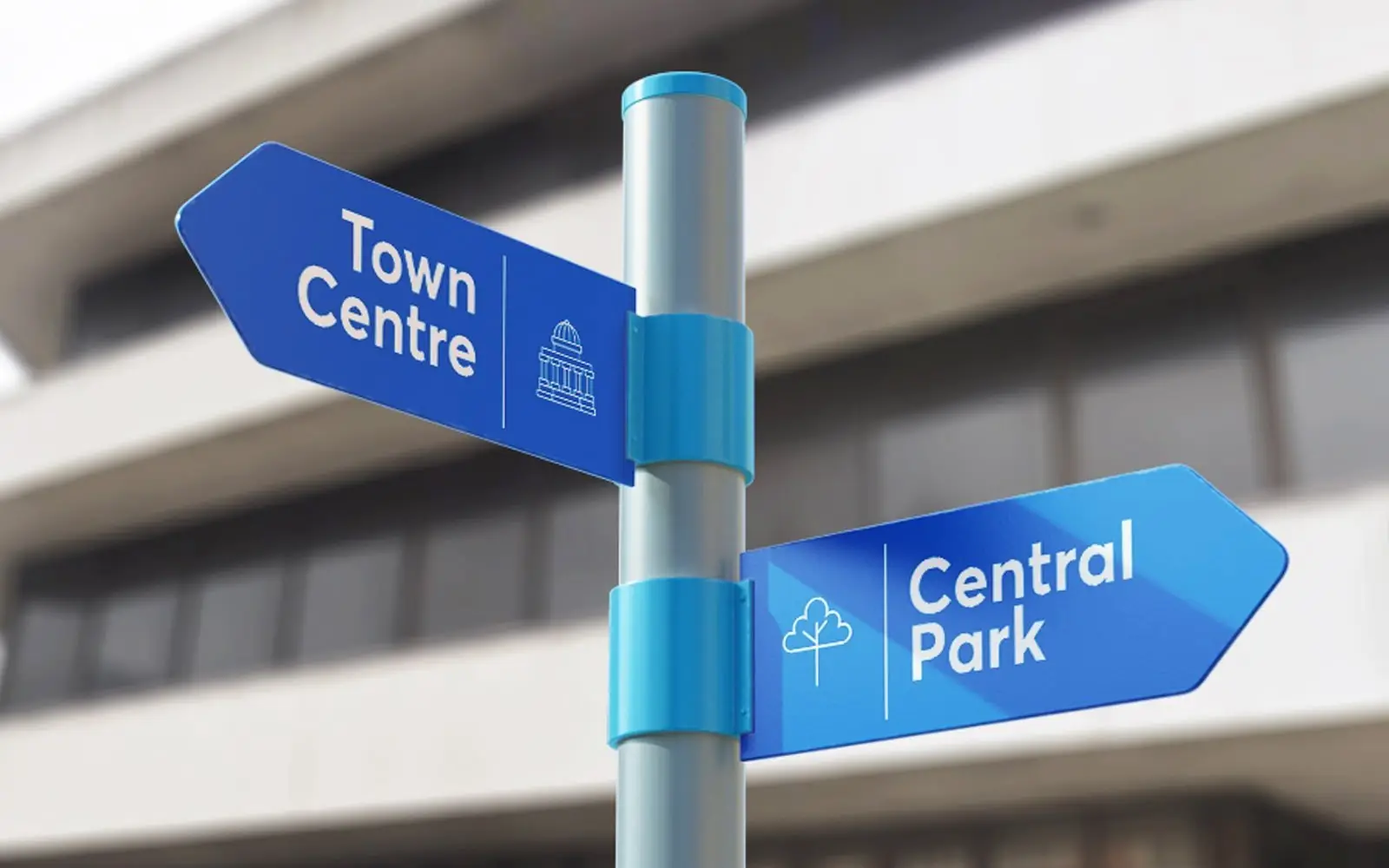
Which Zealot service does this fall under?
This page covers how we deliver Architectural Wayfinding specifically in Grove City. The steps below are the parts of our in-house process this work runs through.
What a wayfinding system is made of
A working system has four layers. Identification tells you what building or suite you've arrived at. Directional gets you from a decision point to the next one. Informational covers hours, occupancy, policies. Regulatory covers what code requires — exits, stairwells, areas of refuge, occupant load.
The layer people skip is directional, and it's the one that generates front-desk phone calls. We plan signs at decision points from the floor plan, not at whatever wall happens to be blank.
ADA and Ohio Building Code compliance
Permanent room identification needs raised tactile characters and Grade 2 Braille, correct character height and stroke, non-glare finishes, and a minimum contrast between characters and background. Mounting height and location are prescribed — generally on the latch side of the door within a defined range above the floor, reachable without passing through a swinging door.
Ohio Building Code adds requirements for exit, stairwell, and area-of-refuge signage. These are inspection items, so we identify them in the first sign plan rather than at the CO walk. Our ADA signage page has the detail.
How the design process runs
We start from your floor plans and mark every decision point. That produces a sign location plan and a message schedule — every sign, its type, its copy, and its position. Then we design the family: one visual language across directory, directional, and room ID, sized for real reading distances.
You approve the plan and the schedule before anything is fabricated, which is what keeps a 90-sign package from turning into 30 reprints. Our design and engineering step explains the workflow.
Materials, finishes, and changeability
Brushed and anodized aluminum, acrylic with subsurface graphics, printed and laminated panels, and dimensional letters for lobby identification. For anything that changes — tenant names, staff names, room functions — we build modular holders with replaceable inserts, or a digital directory where the churn is constant.
The wrong call here is expensive: a beautifully permanent tenant directory in a building with annual turnover means paying for a new sign every year.
Grove City building types we work in
Medical and dental office along the Stringtown Road and Hoover Road corridors, professional office around Broadway and Town Center, industrial and distribution space toward Buckeye Parkway and the I-71 interchange, and multifamily common areas throughout the newer communities.
Each type has a different priority: medical needs ADA and departmental clarity, industrial needs safety and dock identification, multifamily needs unit numbering and amenity direction. Our Grove City service area page covers the market.
Interior Wayfinding Signs for Commercial Buildings in Grove City, Ohio: common questions
What does an interior wayfinding package cost?
Architectural wayfinding from Zealot starts around $3,500 for a small system and scales with sign count, material, and how much ADA tactile signage is required. Sign count is the main driver — a 12-sign suite package and a 200-sign medical building aren't comparable.
Which interior signs are legally required?
Permanent room identification needs to meet ADA tactile and Braille requirements, and exit, stairwell, and area-of-refuge signage is required by the Ohio Building Code. Directional and tenant signage is optional but is what keeps visitors from getting lost.
Do interior signs need a permit in Grove City?
Interior signage generally doesn't require a sign permit, but code-required signage is checked at inspection. Exterior signage on the same building does require a permit, and we handle that scope too.
Can you match signage to our existing brand standards?
Yes. Send the brand guide and we design the sign family within it — fonts, colors, and materials matched, with substitutions only where a finish would fail ADA contrast or glare requirements.
Can tenant names be changed without replacing the sign?
If we build for it, yes. Modular inserts, slide-in strips, or a digital directory all handle turnover without refabrication. We recommend the approach based on how often your tenant list actually changes.